3PL & E-Commerce Fulfillment Guide
THE FULFILLMENT GUIDE
3PL & E-Commerce Fulfillment, Explained.
From the first pallet to the final parcel: a clear guide to the warehouse services behind your business.
Michigan warehouse · U.S. fulfillment
01
Selling a product creates a promise: the right item needs to reach the right customer in the condition they expect. Fulfillment is the work that turns that promise into a delivered order.
02
This guide explains what happens between inventory arriving at a warehouse and an order leaving it. It covers third-party logistics, storage, direct-to-consumer fulfillment, Amazon FBA prep, cross-docking, returns, kitting, packaging, and the questions to ask before choosing a provider.
03
Nearby Fulfillment operates from Garden City, Michigan, and serves businesses whose orders ship to U.S. customers. You don’t need to be based in Michigan to use our services.
ShopifyTikTok ShopWalmart MarketplaceAmazon FBA & FBM
CHAPTER 01
Understanding 3PL and fulfillment

What is a 3PL?
A 3PL is a third-party logistics provider: an outside business that performs agreed logistics tasks for another business. Those tasks can include receiving inventory, storing products, preparing shipments, fulfilling orders, or handling returns.
For example, a clothing brand may design and sell its products while a 3PL receives its cartons, stores each size separately, packs customer orders, and hands those parcels to shipping carriers.
The exact work depends on the provider and your agreement. The term “3PL” does not mean every provider offers every warehouse, transportation, or product-handling service.
What is e-commerce fulfillment?
E-commerce fulfillment is the process of preparing and dispatching orders placed through an online store or marketplace. It typically involves retrieving the ordered products, checking the quantities, packing them, applying shipping labels, and transferring the parcels to a carrier.
Receiving, storage, inventory records, and returns support that process. If stock is incorrectly identified or cannot be found, even a simple order becomes difficult to fulfill reliably.
How are logistics, fulfillment, and shipping different?
Logistics is the broader coordination of goods moving and being stored. Fulfillment focuses on completing orders. Shipping is the transportation of goods between locations.
A warehouse might correctly pack a parcel today, while its carrier delivers it several days later. Warehouse processing time and carrier transit time are separate parts of the customer experience.
What does DTC mean?
DTC means direct-to-consumer. A brand sells to the person who will use the product rather than first selling it to another retailer. A customer purchasing a shirt from a brand’s online store is a typical DTC transaction.
DTC fulfillment usually involves individual parcels, customer-specific addresses, and small quantities per order. A shipment of many cartons to a retail store has different preparation and delivery requirements.
Is a 3PL the same as a shipping carrier?
No. A fulfillment provider prepares goods for dispatch; a shipping carrier transports them. A provider may arrange transportation or purchase shipping labels, but you should establish who pays the carrier, who handles claims, and what happens if a delivery is delayed.
Is a 3PL the same as dropshipping?
No. In a typical 3PL arrangement, your business supplies inventory to the warehouse before customer orders arrive. In a typical dropshipping arrangement, a supplier ships products after you make a sale, without you first holding those products in your own warehouse or 3PL location.
Do I still own my inventory when I use a 3PL?
In a typical fulfillment arrangement, storing inventory at another company’s warehouse does not transfer ownership to that company. Your contract should explain ownership, access, loss or damage responsibilities, and how inventory is released when the relationship ends.
Who needs a fulfillment provider?
A provider can be useful when order packing interrupts other business work, inventory has outgrown available space, shipping mistakes are increasing, or several sales channels need a coordinated warehouse process.
There is no single order count that makes outsourcing the right choice. Compare the full cost and effort of your current operation with the proposed warehouse arrangement, including your time, storage, materials, software, and errors.
CHAPTER 02
How an order moves through a warehouse
What are the main stages of fulfillment?
An ordinary stored-inventory workflow follows these stages:
- Receiving: Inventory arrives and is checked against the expected shipment.
- Identification: Products are matched to the correct inventory records.
- Storage: Goods are placed in assigned warehouse locations.
- Order release: A valid customer order becomes available for warehouse processing.
- Picking: The required products and quantities are retrieved.
- Packing: The order is checked and placed in suitable packaging.
- Labeling and dispatch: A shipping label is applied and the parcel is handed to a carrier.
- Tracking and exceptions: Shipment information is recorded, and problems are investigated when needed.
Returns create a separate flow back into the warehouse. FBA prep and cross-docking also follow different paths, explained below.
What information does a warehouse need to fulfill an order?
At minimum, an order needs identifiable products, quantities, a usable destination address, and an agreed shipping method. Additional instructions may cover packaging, inserts, gift notes, bundles, or whether an order should be held.
The warehouse also needs rules for exceptions: an unavailable item, an invalid address, a cancelled order, or a product requiring special handling.
What is a SKU?
A SKU, or stock keeping unit, is an identifier your business uses to distinguish inventory. Different sizes, colors, or pack quantities normally need distinct identifiers if they must be picked separately.
For example, a black medium shirt and a black large shirt should not share an ambiguous inventory record. Clear identification helps prevent shipping the right style in the wrong size.
What is a barcode, and how does it differ from a SKU?
A barcode is a machine-readable symbol. A SKU is an inventory identifier. A barcode may encode an identifier or connect to it through a system, but they are not automatically the same thing.
Before sending inventory, agree which labels the warehouse will use and how they correspond to your product list. Different barcodes pointing to the same product—or the same barcode used for different products—can create receiving and picking problems.
CHAPTER 03
Receiving, warehousing, and inventory
What is receiving?
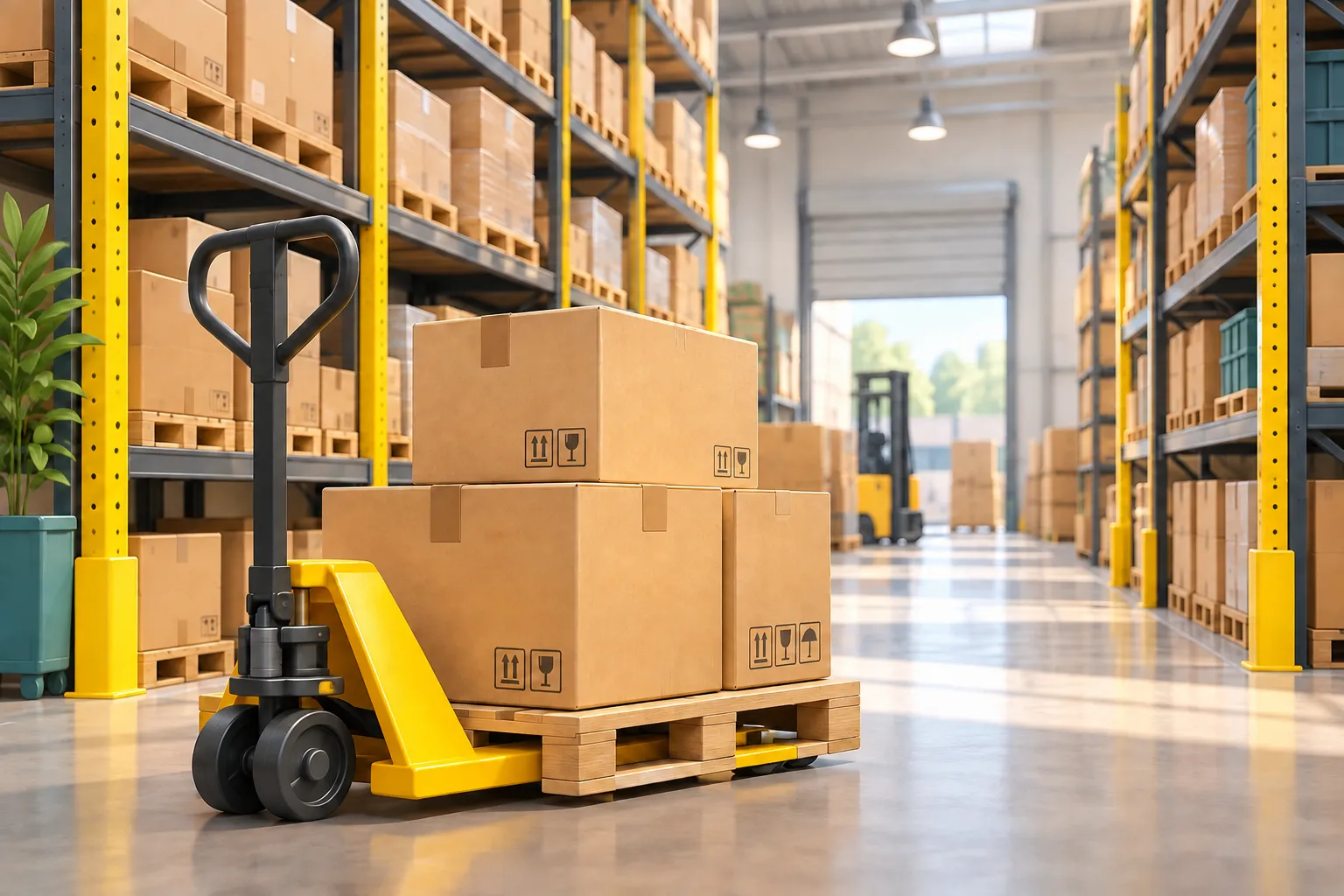
Receiving is the process of accepting an inbound shipment and recording what arrived. Depending on the agreed service, checks may cover pallet or carton counts, product quantities, visible damage, and differences from shipment paperwork.
“Delivered to the warehouse” and “available to fulfill orders” are different milestones. Goods may need counting, labeling, or investigation before they can enter available inventory.
How should I prepare my first inventory shipment?
Provide a product list and an expected shipment breakdown before goods arrive. Identify the products and quantities in each carton or pallet, give the warehouse shipment references, and agree any appointment or unloading requirements.
Mixed cartons should be clearly documented. Tell the provider about fragile items, unusual dimensions, product restrictions, or labeling work before arranging delivery.
What is warehousing?
Warehousing is the organized storage and handling of goods between arrival and their next use or shipment. Good storage involves more than available floor space: inventory needs identifiable locations, appropriate handling, and records that connect physical stock to product quantities.
Our Garden City facility offers secure, climate-controlled warehouse storage. Please discuss specific temperature requirements or product suitability with us before sending inventory; climate-controlled storage should not be assumed to mean refrigerated or frozen storage.
What is the difference between pallet storage and bin storage?
A pallet supports larger quantities of goods that can be moved together using appropriate equipment. A bin is a smaller assigned storage location, often useful for products picked individually.
A brand may hold reserve inventory on pallets and use smaller picking locations for daily orders. The right arrangement depends on dimensions, quantities, replenishment needs, and how orders are packed.
Can different products be stored together?
They can share a larger storage area if the warehouse can reliably distinguish and retrieve them. Separate identification remains essential. Products that look alike, have different versions, or require lot tracking need particular attention.
How is inventory accuracy maintained?
Accuracy depends on recording goods as they arrive, move, ship, return, or change condition. Periodic counts help identify differences between physical stock and recorded quantities.
Ask how discrepancies are investigated and how unavailable, damaged, returned, or reserved units are separated from sellable stock. A total quantity alone may not tell you how much inventory can actually be shipped.
Can a warehouse manage expiry dates or product lots?
Some providers support those requirements, but you must confirm the capability for your products. Explain whether you need lot identification, expiry tracking, or a particular stock rotation method before onboarding.
These are product-specific requirements, not automatic features of every fulfillment arrangement.
CHAPTER 04
Picking, packing, and nationwide fulfillment
What is pick and pack?
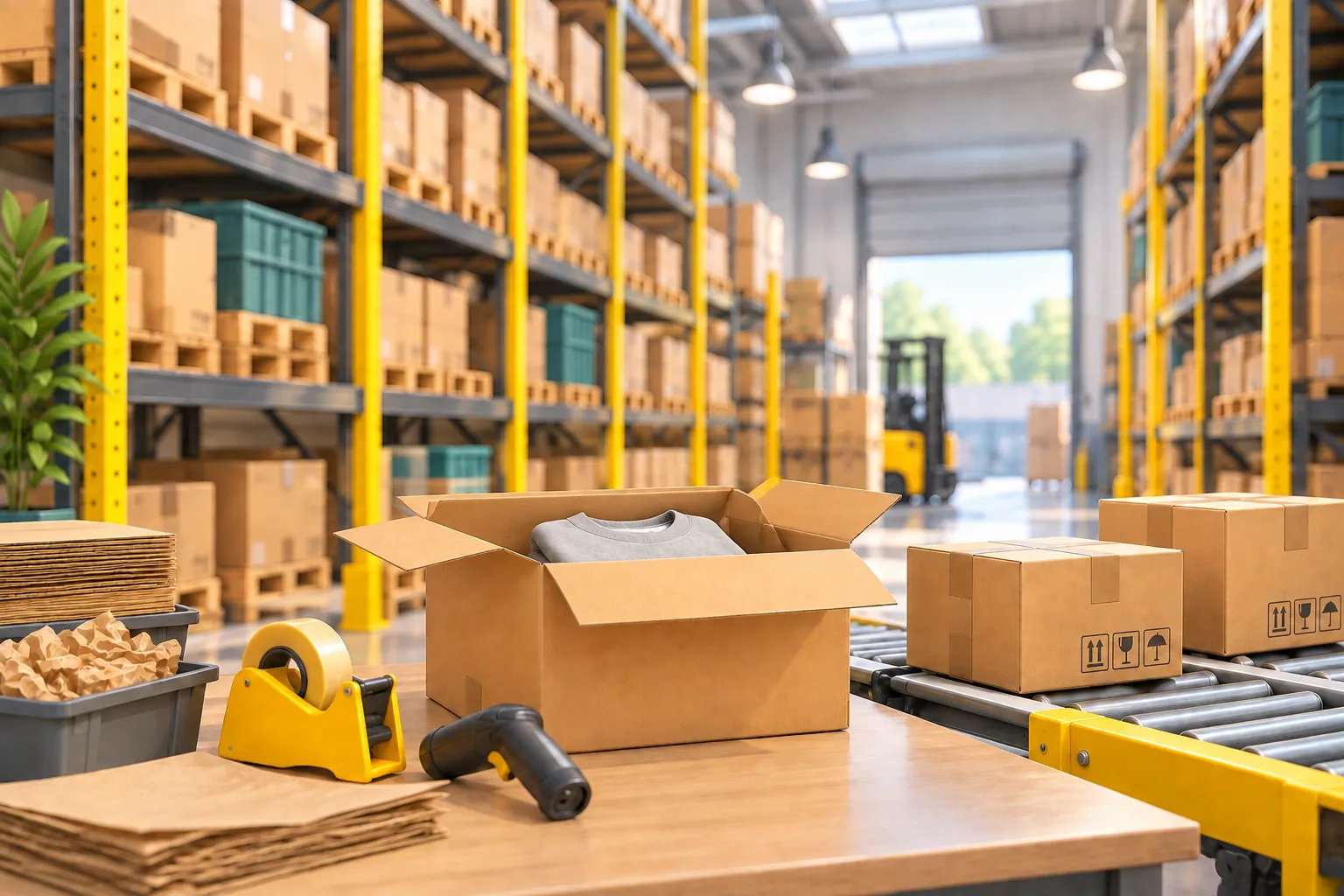
Picking means retrieving the products needed for an order. Packing means checking those products and placing them in appropriate packaging for shipment.
For example, an order for two shirts and a cap requires the correct variants and quantities, one agreed packaging arrangement, and the correct destination label. Picking and packing must work together to complete that order accurately.
Can a fulfillment provider handle orders from different sales channels?
We handle order fulfillment for Shopify stores, TikTok Shop, and Walmart Marketplace, alongside Amazon orders fulfilled outside FBA. Shopify is an e-commerce platform; TikTok Shop and Walmart Marketplace are sales marketplaces.
Confirm how orders arrive, inventory updates, tracking, and cancellations work for each channel. Supported fulfillment does not automatically mean every channel uses a direct software integration.
Can one warehouse fulfill orders across the United States?
Yes. A warehouse can dispatch parcels to customers around the country through carrier networks. Serving customers nationwide does not require the business selling the products to be located near the warehouse.
Orders ship to U.S. customers from our Garden City, Michigan facility, wherever your business is based. Transit time and shipping cost depend on the destination, package characteristics, carrier service, and other shipment conditions.
Does nationwide fulfillment mean nationwide next-day delivery?
No. Service coverage describes where orders can be sent; delivery speed describes how quickly they arrive. A nationwide operation can offer different delivery times to different destinations.
Confirm warehouse processing schedules separately from the carrier’s estimated transit time. Do not build a customer delivery promise around an assumed shipping speed.
Can an international business use a U.S. fulfillment warehouse?
Yes. Nearby Fulfillment works with overseas companies that sell to U.S. customers. You can store inventory at our Garden City, Michigan warehouse and have orders fulfilled to customers across the United States, wherever your business is based.
Import arrangements are a separate part of the process. Establish who handles freight, customs clearance, duties, and delivery to the warehouse. Do not assume warehouse fulfillment includes those services.
What happens when an item is out of stock?
The response should follow an agreed rule. Options may include holding the order, shipping available items separately, or returning the exception to the seller for a decision.
The warehouse should not substitute a different product without an agreed instruction. Decide how your team and your customers will receive updates about shortages.
Can I change or cancel an order after it is submitted?
That depends on its processing stage and the provider’s workflow. An order that has already been picked, labeled, or handed to a carrier may be difficult or impossible to change.
Agree a cancellation process and understand the point after which a change cannot reliably be stopped.
CHAPTER 05
Amazon FBA preparation
What is Amazon FBA?
FBA stands for Fulfillment by Amazon. It is an arrangement in which eligible inventory is placed in Amazon’s fulfillment network for Amazon to fulfill customer orders.
Sending stock into that network is an inbound inventory task. It differs from a 3PL directly shipping an individual customer order from its own warehouse.
What is FBA prep?
FBA prep is the work performed before inventory is sent to Amazon so the shipment meets the applicable product, packaging, identification, and shipment requirements.
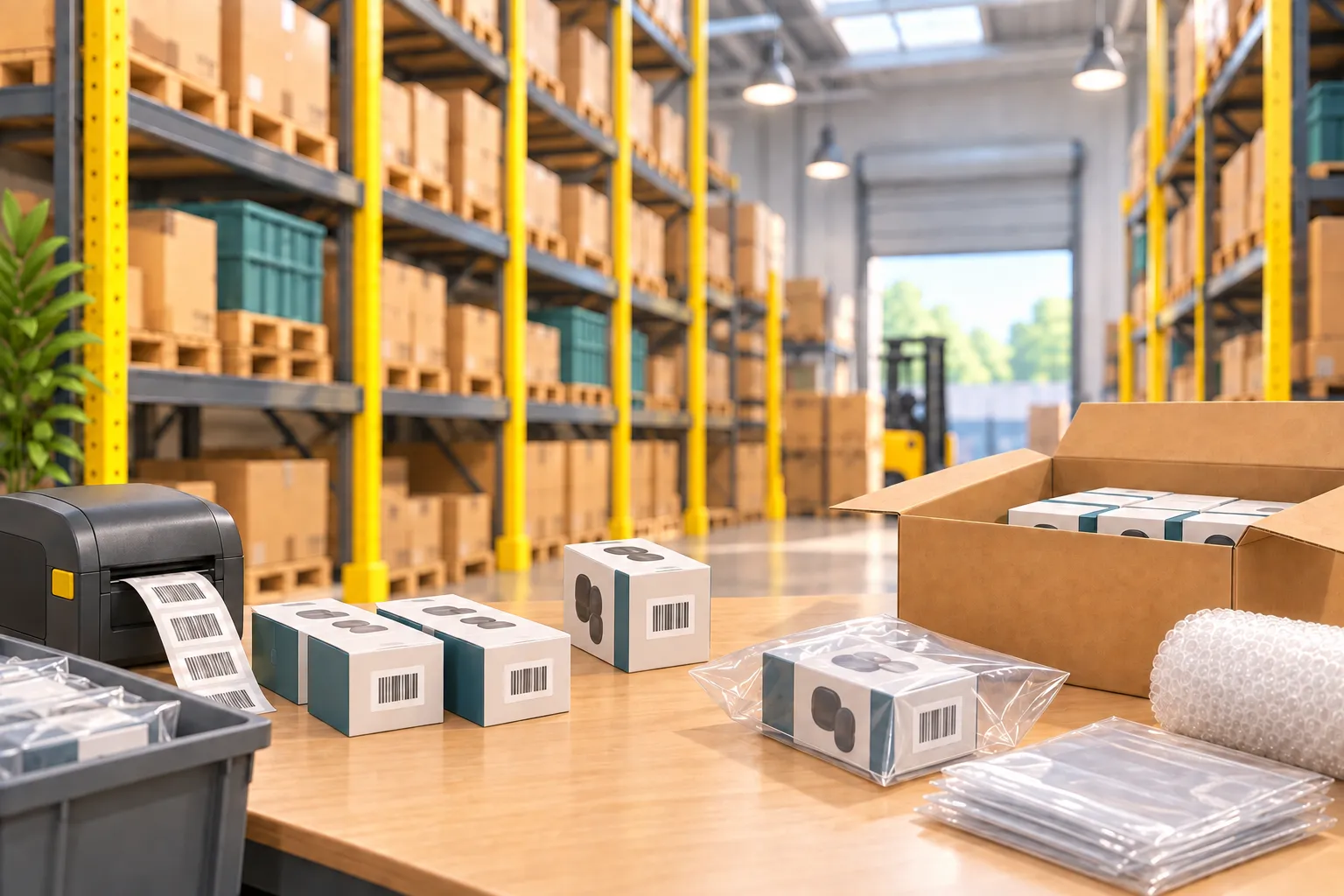
Nearby Fulfillment offers FNSKU labeling and poly bagging for Amazon FBA prep. Poly bagging encloses a product in a protective plastic bag; whether it is required and how it must be labeled depend on Amazon’s current product-specific instructions.
What is an FNSKU label?
An FNSKU is an Amazon inventory identifier used to identify products within its fulfillment process. An FNSKU label is applied when the relevant Amazon workflow requires that identification.
It is different from the shipping label used to transport a carton. Confirm the correct labels and current instructions in your seller account rather than assuming every product follows the same labeling method.
Does FBA prep mean packing every item into a separate shipping box?
Not necessarily. Product-level preparation and shipment-level packing are different tasks. Individual items may need particular preparation, while several prepared units may be packed into an inbound carton according to the shipment instructions.
The product’s requirements and the seller’s shipment plan determine the correct approach. A general guide cannot replace the instructions for a specific shipment.
What is the difference between FBA and FBM?
With FBA, Amazon handles fulfillment through its network. With Fulfilled by Merchant, or FBM, the seller arranges fulfillment outside that FBA flow, either directly or through a provider.
Amazon is the marketplace in both cases, but the party preparing and dispatching the customer order differs. Confirm which arrangement applies to each product before routing inventory.
What should I provide for an FBA prep quote?
Provide product identifiers, unit counts, dimensions, packaging condition, labeling needs, and the requested shipment work. Explain whether inventory arrives already prepared or needs additional processing.
Amazon’s requirements can change and vary by product. Use the current instructions available through your seller account when approving preparation and dispatch.
CHAPTER 06
Cross-docking and pallet handling
What is cross-docking?
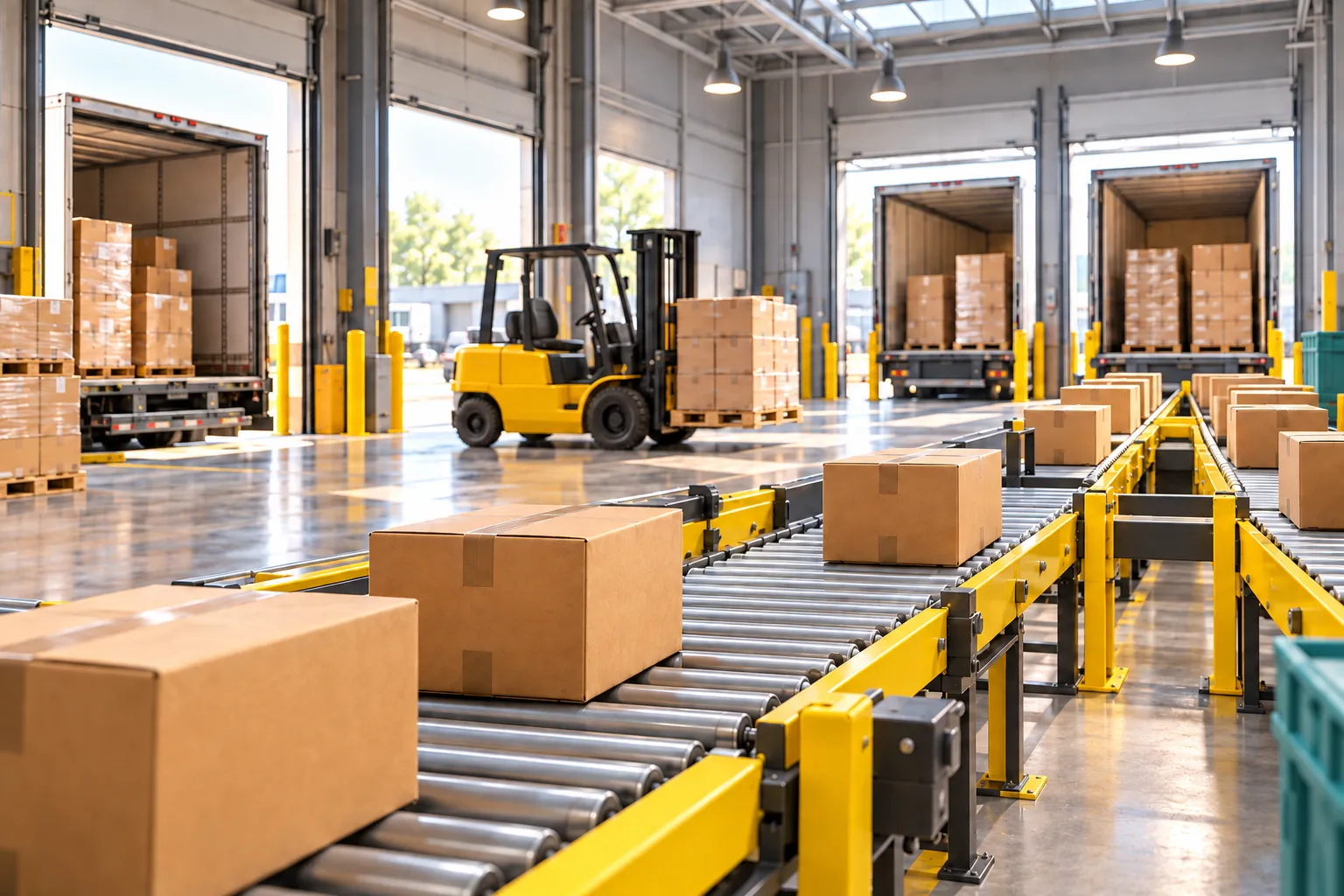
Cross-docking moves goods from an inbound shipment to an outbound shipment with limited holding time, rather than placing them into ordinary long-term storage. It is useful when the goods already have a next destination and need a controlled transfer between movements.
For example, several pallets might arrive on one truck and leave on another after the receiving and outbound handling have been coordinated.
How is cross-docking different from warehousing?
Warehousing holds goods until they are needed. Cross-docking is organized around an upcoming outbound movement. Its success depends on shipment information, arrival timing, available handling capacity, and the next carrier’s arrangements.
If the outbound truck is delayed, goods may need temporary storage. Establish those terms before the shipment arrives.
How is cross-docking different from kitting?
Cross-docking transfers freight between shipments. Kitting combines separate products into a defined unit or package. A pallet can be cross-docked without any of its products being assembled into a kit.
Does cross-docking include sorting or rebuilding pallets?
It may, if that work is agreed. Moving intact pallets is different from opening cartons, separating products, combining freight, or rebuilding loads.
Describe the required handling accurately when requesting a quote. “Cross-docking” alone does not establish how much work is included.
What information is needed to arrange cross-docking?
Provide inbound and outbound dates, carrier information, pallet counts, dimensions and weights, shipment references, and handling instructions. Explain any unloading, appointment, equipment, or load-separation requirements.
Nearby Fulfillment offers pallet cross-docking in Garden City, Michigan, and the first 24 hours of storage are complimentary. Confirm timing and any applicable charges in your quote.
CHAPTER 07
Kitting, bundling, and custom packaging
What is kitting?
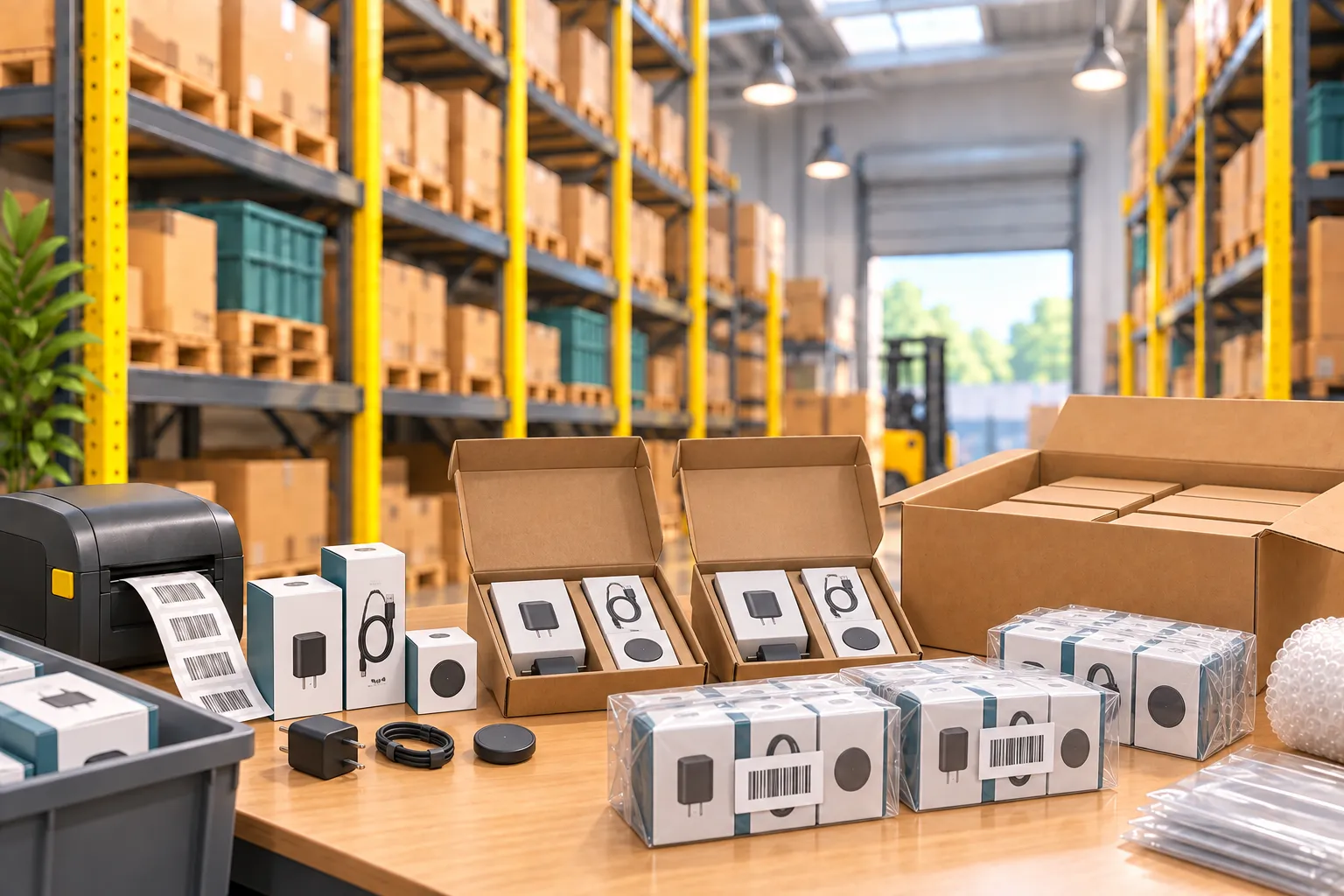
Kitting brings specified components together into a ready-to-use or ready-to-ship set. The instructions define which products, quantities, and packaging belong in each kit.
For example, a starter kit might contain a shirt, a cap, and an accessory. The warehouse checks the components and assembles them into the agreed package.
What is bundling?
Bundling groups products into a combined offer. The physical preparation may be done before orders arrive or during packing, depending on the arrangement.
Because businesses use “kitting” and “bundling” differently, give the provider a component list and a packaging example instead of relying on the name alone.
How does a bundle affect inventory?
The inventory process must account for the components used. If a kit contains one shirt and one cap, shipping or assembling ten kits consumes ten of each component.
Agree whether finished kits have their own identifier, when component stock is deducted, and what happens if one component runs out.
What is custom packaging?
Custom packaging adapts the order’s presentation to a brand’s requirements. It can involve branded boxes, printed inserts, particular packing materials, or a defined arrangement of products inside the package.
We offer custom packaging, branded inserts, gift notes, and packaging materials as quote-based add-ons through our kitting and packaging service. Confirm the materials, assembly steps, supply responsibilities, and costs before starting.
Is custom packaging only about appearance?
No. Packaging also protects the product and affects parcel dimensions and weight. An attractive box that is unnecessarily large can change shipping costs; inadequate protection can increase damage.
Choose packaging that balances product protection, presentation, handling time, and the shipped parcel’s size.
Can every order contain an insert or gift note?
That depends on the agreed workflow and available materials. Specify whether the instruction applies to every order or only selected orders, and how the warehouse identifies the correct insert or message.
CHAPTER 08
Returns and exceptions
What is returns processing?
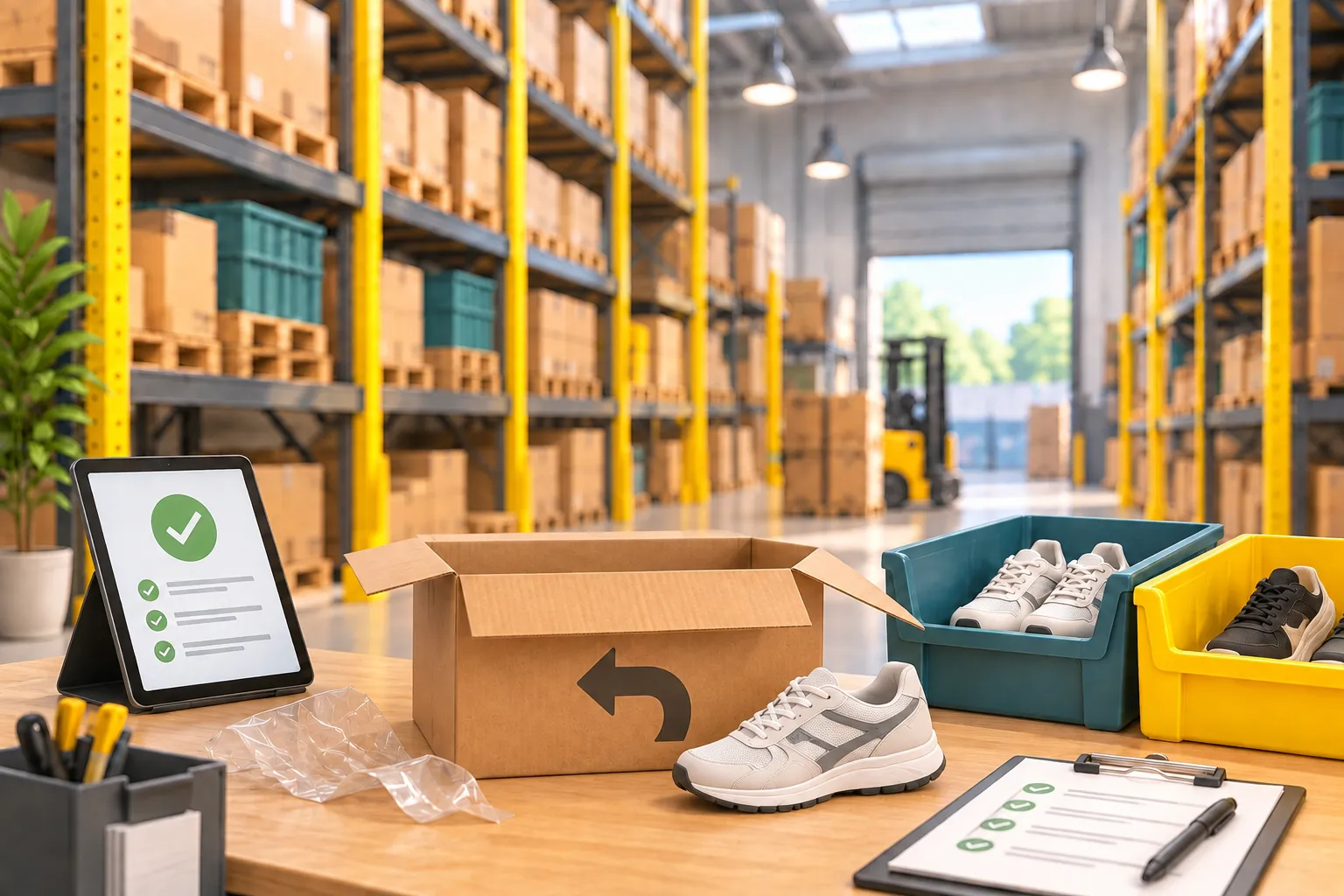
Returns processing is the work of receiving an item back, identifying it, assessing its condition under agreed instructions, and recording the next action.
A return might be suitable for restocking, need additional review, or be unsuitable for resale. Receiving a parcel back does not automatically make every unit inside sellable.
Does the warehouse decide whether to refund a customer?
That responsibility should be established in your arrangement. Warehouse inspection and customer refund decisions are different tasks. The provider can record findings while the seller applies its return and refund policy.
What happens after a returned item is inspected?
It should follow a documented decision: return to sellable inventory, hold for review, or another authorized disposition. Any repacking, relabeling, repair, disposal, or forwarding work must be agreed rather than assumed.
Nearby Fulfillment offers returns processing. Tell us how returns should be inspected and what should happen next before you set up a returns flow.
Who handles missing or damaged shipments?
Clarify responsibilities for warehouse shortages, inbound damage, incorrect picks, and carrier loss or damage separately. These problems happen at different stages and can require different evidence.
Ask what records are kept and how an issue is reported, investigated, and resolved. Do not assume every problem follows the same reimbursement process.
CHAPTER 09
Understanding fulfillment costs
What makes up the total cost of fulfillment?
Depending on the provider, total charges can include receiving, storage, order handling, additional items, materials, shipping, account fees, setup work, special preparation, and returns.
A low headline pick-and-pack rate does not describe the full cost of an order. Review the entire charge structure against a realistic sample of your shipments.
Is postage included in the fulfillment rate?
It may be included or charged separately, depending on the agreement. At Nearby Fulfillment, shipping/postage and applicable additional charges are separate from the per-order fulfillment rates listed on our pricing page.
Use the pricing page for the current published breakdown and obtain a quote for your operation. Published prices are estimates, and final rates are confirmed in the quote.
Why do dimensions and weight matter?
They affect how goods are stored, handled, packaged, and transported. Shipping charges may take account of both actual weight and package size under the applicable carrier rules.
A lightweight but bulky item can have a different cost profile from a compact item of the same weight. Provide packed dimensions as well as product dimensions when comparing options.
Why can two orders cost different amounts to fulfill?
They may contain different quantities, require different materials, or involve different handling work. A single sturdy product in a standard mailer differs from a multi-item gift set with fragile components and custom inserts.
What information makes a quote more accurate?
Prepare your expected monthly order volume, units per order, SKU count, product dimensions and weights, storage needs, inbound shipment pattern, delivery destinations, packaging instructions, and return volume.
For FBA prep, include unit-level preparation requirements. For cross-docking, include pallet and movement details. Explain seasonal peaks and any work that falls outside routine handling.
How should I compare two fulfillment quotes?
Give both providers the same sample workload. Compare the total estimated bill and the included work, then check assumptions, minimums, extra charges, and service responsibilities.
Ask for examples of an ordinary order, a multi-item order, a return, and a busy month. A useful comparison connects price to the actual operation you need.
CHAPTER 10
Choosing a provider and getting started

What questions should I ask a 3PL before signing?
- Can you handle my actual products, dimensions, and packaging requirements?
- Which tasks are included, and which need separate quotes?
- How do orders and inventory information move between our systems?
- When does received inventory become available for orders?
- What are the processing schedules and exception procedures?
- How are shortages, errors, returns, and damage documented?
- What fees apply during a quiet month or a seasonal peak?
- Who provides packing materials and branded supplies?
- What are the contract, inventory release, and exit arrangements?
- Who is my operational contact when something needs attention?
How do I move inventory to a new fulfillment provider?
Agree the inventory list, delivery arrangements, labels, storage requirements, order connection, packaging instructions, and receiving process before shipping stock.
Use a controlled transition: reconcile quantities, confirm stock availability, test an order, and verify tracking before routing all orders through the new setup. Avoid changing inventory location and order routing without a coordinated plan.
Can I start with one service and add others later?
That can be possible, subject to the provider’s capacity and agreement. For example, a business might initially need FBA prep, then later add storage and DTC fulfillment.
Discuss the future workflow early. Product identification, packaging, and inventory records should support the services you expect to use.
How do I decide between fulfillment, FBA prep, cross-docking, and storage?
| Your immediate need | Service to discuss |
|---|---|
| Keep inventory organized until it is needed | Warehousing and storage |
| Send individual orders to customers | Order fulfillment / pick and pack |
| Prepare inventory for Amazon’s fulfillment network | Amazon FBA prep |
| Transfer pallets between inbound and outbound movements | Cross-docking and pallet handling |
| Combine products into a defined set | Kitting and bundling |
| Add brand-specific presentation to orders | Custom packaging and agreed add-ons |
| Receive and assess customer returns | Returns processing |
Several services can be used together. Your product, destination, timing, and handling instructions determine the right combination.
Where does Nearby Fulfillment fit?
Nearby Fulfillment provides warehousing, order fulfillment, Amazon FBA prep, pallet cross-docking, returns processing, and kitting and bundling from Garden City, Michigan. Our pricing page also lists quote-based custom packaging and other add-ons.
Your business can be based anywhere, as long as orders ship to U.S. customers. Talk to us about product suitability, requested work, system connections, schedules, and rates before sending inventory.
Explore our services, review pricing and add-ons, or contact Nearby Fulfillment with your inventory and shipment requirements.
By Nearby Fulfillment · Updated October 9, 2026
Marketplace requirements vary by product and can change. Confirm current instructions in your seller account.
Official resources: Amazon FBA preparation · Amazon FBM · Shopify fulfillment